
Things have not gone the Yankees' way so far this season, and George Steinbrenner announced today that General Manager Brian Cashman's future with the club may hinge on the outcome of this season.
Shortly thereafter, Steinbrenner also suggested that if New York's season doesn't turn around, bat boy #99, a.k.a. "Glenn," may be out of work.
"When we brought him here, number 99 was the pimple-covered face of our clubhouse," Steinbrenner said. "Now, we can barely get him to hustle out to grab a foul ball to the backstop."
Given Glenn's $500,000 salary this season, which is significantly higher than the league minimum for players, Steinbrenner said it might be prudent to try to find a trading partner to ease the strain on the salary cap.
The other, more ominous option, entails an investigation into Glenn's past, when it is believed he may have taken performance enhancing drugs. Players and coaches on Glenn's former team, the Marlins, reported record times in bringing replacement bats to hitters.
Glenn's performance raised eyebrows even then, but the Yankees were undissuaded in their desire to sign him to a long-term deal.
But with the season in turmoil -- and foul balls waiting up to three, even four seconds before Glenn can reach them -- the Yankees may look to void Glenn's deal and end his rocky tenure in New York.
Glenn's mom said he was at choir practice and therefore unavailable for comment.

May 24, 2007
Hancock Lawsuit = Missed Opportunity
I don't know about you, but I've been fascinated by the aftermath of the Josh Hancock tragedy. I initially wrote about the knee-jerk reaction of Major League Baseball teams banning alcohol in their clubhouses, saying that they were closing the barn door after the horse was out.
Now that Dean Hancock has decided to sue Mike Shannon's Restaurant for giving his son as much alcohol as he asked for, I feel compelled to tackle the same topic from a different angle.
Before I go any further, I should mention that I've gotten a couple of insightful comments on the earlier Hancock posting, and I would encourage anyone reading this to check those out as well. If it seems like I'm copying the anonymous sentiments shared on this blog, I'm not. They just agreed with what I had already planned to write.
In one sense, Mr. Hancock's reaction isn't much of a surprise. He's a grieving father who's looking for a way to alleviate his pain. Unfortunately, he has elected to blame others rather than owning up to his son's mistake.
Mr. Hancock's inability to accept responsibility is indicative of our culture. If you've become obese by eating Big Macs, the only logical response is to sue McDonalds! Likewise, Mr. Hancock is suing a restuarant for his son's recklessness, as if their cutting him off would have prevented the accident altogether. The reality is that Josh Hancock's unlimited access to alcohol at a particular restaurant was only a small variable in a complicated equation.
In choosing to blame his son's accident on others -- the restaurant, the tow truck, the stalled driver whom the truck was picking up -- Mr. Hancock missed a golden opportunity to publicly own up to his son's mistake and plead with others not to repeat it.
A co-worker brought to my attention the reaction of Carroll O'Connor (Archie Bunker) to his son's death by overdose. In the wake of tragedy, O'Connor took the platform made available to him and became an anti-drug spokesperson and lobbyist.
I wish Mr. Hancock would be willing to do the same.
As I wrote in the first post, the damage has already been done: Josh Hancock is dead. I'm starting to think the greater tragedy is the teachable moment gone to waste.
Now that Dean Hancock has decided to sue Mike Shannon's Restaurant for giving his son as much alcohol as he asked for, I feel compelled to tackle the same topic from a different angle.
Before I go any further, I should mention that I've gotten a couple of insightful comments on the earlier Hancock posting, and I would encourage anyone reading this to check those out as well. If it seems like I'm copying the anonymous sentiments shared on this blog, I'm not. They just agreed with what I had already planned to write.
In one sense, Mr. Hancock's reaction isn't much of a surprise. He's a grieving father who's looking for a way to alleviate his pain. Unfortunately, he has elected to blame others rather than owning up to his son's mistake.
Mr. Hancock's inability to accept responsibility is indicative of our culture. If you've become obese by eating Big Macs, the only logical response is to sue McDonalds! Likewise, Mr. Hancock is suing a restuarant for his son's recklessness, as if their cutting him off would have prevented the accident altogether. The reality is that Josh Hancock's unlimited access to alcohol at a particular restaurant was only a small variable in a complicated equation.
In choosing to blame his son's accident on others -- the restaurant, the tow truck, the stalled driver whom the truck was picking up -- Mr. Hancock missed a golden opportunity to publicly own up to his son's mistake and plead with others not to repeat it.
A co-worker brought to my attention the reaction of Carroll O'Connor (Archie Bunker) to his son's death by overdose. In the wake of tragedy, O'Connor took the platform made available to him and became an anti-drug spokesperson and lobbyist.
I wish Mr. Hancock would be willing to do the same.
As I wrote in the first post, the damage has already been done: Josh Hancock is dead. I'm starting to think the greater tragedy is the teachable moment gone to waste.
May 22, 2007
New Mascots in the Spirit of LSU
 LSU announced today that it will indeed find another tiger to serve as its mascot -- despite protests from PETA. Respectable mascots are a dying breed these days, so count this as a victory for sports.
In the spirit of political incorrectness and general silliness, I've come up with a list of mascots that should undergo a name change -- some drastic, some subtle. Please feel free to add your own in the Comments section below.
Golden State Warlords - With the numbers of Warriors remaining in the world dwindling every day, I'm thinking an AK-47 wielding Taliban could bring Golden State into the 21st century.
Los Angeles Fakers - There aren't that many lakes in or around Los Angeles, so I think the team is due for a mascot change. And what moniker more appropriate for the City of Silicon?
Baltimore Mavens - If you don't know what a maven is, look it up. (Then report back to me.)
Washington Bullets - Yes, I know they had this nickname before, but I think most of us would agree that it's much cooler than the Wizards. Would it be too violent to have actual bullet hole as part of the jersey?
Houston Alaskans - Those Texans are all about big, so they should try the Alaskans on for size. Alaska is over twice the size of the Lone Star State.

Detroit Ligers - Since LSU has already borne the brunt of the political incorrectness for being the Tigers, Detroit could go for a change. Ligers is an easy choice because they're pretty much my favorite animal.
Stanford Maroon - If you're going to be a color, at least choose one people have heard of.
 Philadelphia Seagulls - It still has a ring to it, yet better describes the general mentality of the team.
Cleveland Injuns - If they thought Indians was offensive, this should really stir them up.
May 20, 2007
Jason Giambi: The Next Jim Bouton?
 The Yankees paid big bucks for an apparently juiced Jason Giambi, but now they're claiming they received a lemon. ESPN reports that New York may seek to void Giambi's contract based on remarks he made last week, in which he insinuated that he used steroids in the past.
When I first read Giambi's remarks, I can't say I was shocked. Does anyone else remember the "tape worm" he had in 2004? Big surprise that what actually ailed him was never revealed, right?
Actually, I was impressed that Giambi had the courage to say what he said. It takes guts to break with the status quo, both in the Yankees' organization and in Major League Baseball as a whole.
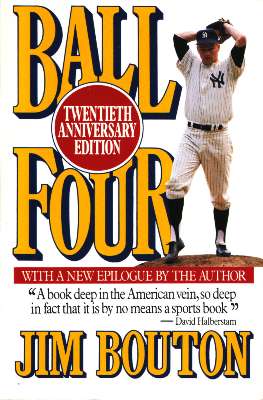
As a side note, I borrowed Ball Four from a relative yesterday. I've never read it, and even though I only got through the first chapter last night, I came down with a bad case of deja vu when I read today that Giambi is in danger of losing his contract. It seems to me that Jim Bouton should have told Giambi that telling the truth can be dangerous.
The fact is that Giambi cheated. So did lots of other players, but he's been the only active player (that I can think of) to admit it. To me, that's bravery.
Of course his contract is inflated. But think about all the extra revenue that the "inexplicable" increase in home runs brought to baseball. The Yankees benefitted from that as much or more than any other team. Besides, what would they do with the recouped money anyway?
Maybe they're just looking for a way to pay Roger Clemens.
May 18, 2007
Kyle Farnsworth: You Spoke the Truth, Now Expect a Trade
Kyle Farnsworth publicly criticized Roger Clemens' "family plan" clause yesterday, and that can only mean one thing.
He wants to be traded.
Farnsworth was absolutely, positively correct in his criticism of Clemens' special treatment. No one else on the team goes home between games, so why should Roger?
Fair or not, though, the Yankees' $20 million plus on the table makes it pretty easy to figure out who they'll side with if things get ugly between Clemens and Farnsworth.
So Kyle, if you wanted to retire a Yankee, you just made a big mistake. But if your bags are packed and you're already researching hotspots in Pittsburgh, speaking the truth about Roger was just the right move.
He wants to be traded.
Farnsworth was absolutely, positively correct in his criticism of Clemens' special treatment. No one else on the team goes home between games, so why should Roger?
Fair or not, though, the Yankees' $20 million plus on the table makes it pretty easy to figure out who they'll side with if things get ugly between Clemens and Farnsworth.
So Kyle, if you wanted to retire a Yankee, you just made a big mistake. But if your bags are packed and you're already researching hotspots in Pittsburgh, speaking the truth about Roger was just the right move.
May 16, 2007
Horry Smirks as Stoudemire and Diaw Sit
 The NBA has been acting like a bad parent this season, starting with mismanagement of Kobe Bryant's "flagrant flails" and now escalating with the suspension of Amare Stoudemire and Boris Diaw for coming off the bench in the Robert Horry-Steve Nash incident.
That Cheap Shot Bob received a two-game suspension doesn't matter, because for the pivotal Game 5 of the Western Conference semifinals, the Suns will be without their leading scorer and an invaluable sixth man.
Officially, the judgment was fair. The players came off the bench during a potential altercation, and they received in turn the punishment that league rules stipulate.
But in reality, the league's ruling bites. The NBA is acting like an impetuous parent who wants to be equitable but has no grasp on the concept of fairness.
Imagine for a moment two young brother get angry at each other, and one throws a punch. The second punches back. To punish the boys, the parents announce they are taking away the Legos for a week, because that's what always happens when the boys fight.
The problem is, the first kid -- the one who thre the initial punch -- could care less. He doesn't even like Legos, so the punishment is meaningless.
Of course, this is an imperfect analogy, but as Dilbert creator Scott Adams says, that's what makes it an analogy.
The point is, when the most important game of the series is played tonight, the Suns will be the second child, toiling away without their favorite toy -- or in this case, two of their best players. The Spurs and Robert Horry, meanwhile, will be the first child, reveling in the "fairness" of the punishment.
The league has made a ghastly mistake here, and I recommend that Stu Jackson be grounded for at least two weeks.
May 14, 2007
Which Type is Your Franchise?
 There are two prevailing philosophies that dominate front offices across Major League Baseball.
On the one side, you've got teams who are convinced every year that this could be "the year." This leads to a very predictable pattern of decision-making.
First, these franchises tend to be very active around the trading deadline, gladly swapping two or three good (or even great) prospects for a #5 starting pitcher. These moves are made even when the club is fighting only for the Wild Card and a first-round exit in the playoffs. Such franchises also sign free agents, and lots of them, to fill perceived gaps in thier rosters.
The upside is that franchises that throw their lots in with Philosophy 1 usually compete for their respective division titles or the Wild Card, and they sometimes make a legitimate run at (or win) the World Series.
The downside is that prospects and money are not renewable resources; after a certain amount of time, the franchise is out of top prospects to trade and has a limited budget to piece together a team in the free agent market.
The upside is that franchises that throw their lots in with Philosophy 1 usually compete for their respective division titles or the Wild Card, and they sometimes make a legitimate run at (or win) the World Series.
The downside is that prospects and money are not renewable resources; after a certain amount of time, the franchise is out of top prospects to trade and has a limited budget to piece together a team in the free agent market.
On the other end of the spectrum are franchises that are dedicated to growing talent from within.
Typically, these are the teams that are trading away the players that are free agents-to be in exchange for two or three prospects. These teams often don't have the money to bring in the big name free agents, but that's not always the case.
The downside to these franchises is they sometimes go through long rebuilding phases. At times, they are also accused of not caring because they don't "do what it takes" to win.
But the upside is tremendous. Teams that give prospects a chance to succeed (or fail) at the big league level often reap fantastic dividends. They get several years of good baseball out of their prospects at a relatively cheap price before the prospects are eligible for free agency. If they can't resign their young prospects, Philosophy 2 franchises simply trade them away and get two or three prospects in return and start the process over.
****
It's probably time to admit that I don't care much for free agency. It makes the players greedy and it means that any given athlete may play on four or five different franchises during his career. That stinks, and it makes rivalries difficult to sustain (wasn't he on our team last year?).
But I digress. Free agency is here to stay, and the two franchise philosophies described above will dominate the league for years to come. Which type is your franchise?
Subscribe to:
Posts (Atom)


