May 20, 2007

Jason Giambi: The Next Jim Bouton?

The Yankees paid big bucks for an apparently juiced Jason Giambi, but now they're claiming they received a lemon. ESPN reports that New York may seek to void Giambi's contract based on remarks he made last week, in which he insinuated that he used steroids in the past.

When I first read Giambi's remarks, I can't say I was shocked. Does anyone else remember the "tape worm" he had in 2004? Big surprise that what actually ailed him was never revealed, right?

Actually, I was impressed that Giambi had the courage to say what he said. It takes guts to break with the status quo, both in the Yankees' organization and in Major League Baseball as a whole.

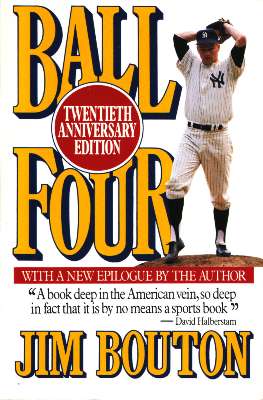
As a side note, I borrowed Ball Four from a relative yesterday. I've never read it, and even though I only got through the first chapter last night, I came down with a bad case of deja vu when I read today that Giambi is in danger of losing his contract. It seems to me that Jim Bouton should have told Giambi that telling the truth can be dangerous.

The fact is that Giambi cheated. So did lots of other players, but he's been the only active player (that I can think of) to admit it. To me, that's bravery.

Of course his contract is inflated. But think about all the extra revenue that the "inexplicable" increase in home runs brought to baseball. The Yankees benefitted from that as much or more than any other team. Besides, what would they do with the recouped money anyway?

Maybe they're just looking for a way to pay Roger Clemens.

May 18, 2007

Kyle Farnsworth: You Spoke the Truth, Now Expect a Trade

Kyle Farnsworth publicly criticized Roger Clemens' "family plan" clause yesterday, and that can only mean one thing.

He wants to be traded.

Farnsworth was absolutely, positively correct in his criticism of Clemens' special treatment. No one else on the team goes home between games, so why should Roger?

Fair or not, though, the Yankees' $20 million plus on the table makes it pretty easy to figure out who they'll side with if things get ugly between Clemens and Farnsworth.

So Kyle, if you wanted to retire a Yankee, you just made a big mistake. But if your bags are packed and you're already researching hotspots in Pittsburgh, speaking the truth about Roger was just the right move.

May 16, 2007

Horry Smirks as Stoudemire and Diaw Sit

The NBA has been acting like a bad parent this season, starting with mismanagement of Kobe Bryant's "flagrant flails" and now escalating with the suspension of Amare Stoudemire and Boris Diaw for coming off the bench in the Robert Horry-Steve Nash incident.

That Cheap Shot Bob received a two-game suspension doesn't matter, because for the pivotal Game 5 of the Western Conference semifinals, the Suns will be without their leading scorer and an invaluable sixth man.

Officially, the judgment was fair. The players came off the bench during a potential altercation, and they received in turn the punishment that league rules stipulate.

But in reality, the league's ruling bites. The NBA is acting like an impetuous parent who wants to be equitable but has no grasp on the concept of fairness.

Imagine for a moment two young brother get angry at each other, and one throws a punch. The second punches back. To punish the boys, the parents announce they are taking away the Legos for a week, because that's what always happens when the boys fight.

The problem is, the first kid -- the one who thre the initial punch -- could care less. He doesn't even like Legos, so the punishment is meaningless.

Of course, this is an imperfect analogy, but as Dilbert creator Scott Adams says, that's what makes it an analogy.

The point is, when the most important game of the series is played tonight, the Suns will be the second child, toiling away without their favorite toy -- or in this case, two of their best players. The Spurs and Robert Horry, meanwhile, will be the first child, reveling in the "fairness" of the punishment.

The league has made a ghastly mistake here, and I recommend that Stu Jackson be grounded for at least two weeks.

May 14, 2007

Which Type is Your Franchise?

There are two prevailing philosophies that dominate front offices across Major League Baseball.

On the one side, you've got teams who are convinced every year that this could be "the year." This leads to a very predictable pattern of decision-making.

First, these franchises tend to be very active around the trading deadline, gladly swapping two or three good (or even great) prospects for a #5 starting pitcher. These moves are made even when the club is fighting only for the Wild Card and a first-round exit in the playoffs. Such franchises also sign free agents, and lots of them, to fill perceived gaps in thier rosters.

The upside is that franchises that throw their lots in with Philosophy 1 usually compete for their respective division titles or the Wild Card, and they sometimes make a legitimate run at (or win) the World Series.

The downside is that prospects and money are not renewable resources; after a certain amount of time, the franchise is out of top prospects to trade and has a limited budget to piece together a team in the free agent market.

On the other end of the spectrum are franchises that are dedicated to growing talent from within
.

Typically, these are the teams that are trading away the players that are free agents-to be in exchange for two or three prospects. These teams often don't have the money to bring in the big name free agents, but that's not always the case.

The downside to these franchises is they sometimes go through long rebuilding phases. At times, they are also accused of not caring because they don't "do what it takes" to win.

But the upside is tremendous. Teams that give prospects a chance to succeed (or fail) at the big league level often reap fantastic dividends. They get several years of good baseball out of their prospects at a relatively cheap price before the prospects are eligible for free agency. If they can't resign their young prospects, Philosophy 2 franchises simply trade them away and get two or three prospects in return and start the process over.

****

It's probably time to admit that I don't care much for free agency. It makes the players greedy and it means that any given athlete may play on four or five different franchises during his career. That stinks, and it makes rivalries difficult to sustain (wasn't he on our team last year?).

But I digress. Free agency is here to stay, and the two franchise philosophies described above will dominate the league for years to come. Which type is your franchise?

May 10, 2007

No Beer in Here

We as Americans have this weird propensity to overreact to tragedy.

When the terrorists took down the Twin Towers, we turned our anger into action, and look at all the security measures millions of innocent travelers face every time they fly. In response to various school shootings in the past decade, some have argued that high schools (and now colleges) should be regulated a little more like prisons.

Creating rules and regulations to prevent things that have already happened make us feel safe, I guess. After all, we have to do something. This is America!

In the wake of the tragic death of Cardinals' pitcher Josh Hancock, several teams have continued this trend by banning alcohol in their clubhouses.

Why? Who's to say that Hancock had any alcohol in the clubhouse the night he died, or if he did that it made a difference? If players want a beer after the game, I'm guessing they'll be able to find it.

I'm not suggesting that banning alcohol in clubhouses is a bad idea, per se. It's just that it's unnecessary, a proverbial closing the barn door after the horse is out.

Josh Hancock is gone, and his loss has been and should continue to be mourned. But it seems like no one is facing the reality that creating rules and regulations won't bring him back.

May 9, 2007

Curt Schilling: A Sportswriter's Dream

As a way of dealing with unwanted attention from the media, many professional athletes slip into Auto-Reponse mode when sportswriters are around.

You know when you send an email and you receive a reply right away? "I am out of the office until May 17. If you need any assistance, please contact my secretary."

For athletes, it's a go-to answer in response to nearly every question: "How'd you feel about your walk off home run today, Alex?"

"It was really a team effort out there. It's always good to come up with a win in games like this."

If you're a sportswriter (or a fan forced to read this quote written by a bad or desperate sportswriter), you're thinking, "Booooring."

And then there is Curt Schilling.

"So, Curt, anything you want to chat about before you head out for your bullpen session?"

"As a matter of fact, yes. First of all, I'd like to say that that was blood on my sock, and I'm willing to take a blood test right here, right now to prove it."

"Second, I'd like to say that Barry Bonds has admitted to cheating on his wife, cheating on his taxes, and cheating on baseball. He's a bad person and doesn't deserve to break Hank Aaron's record."

That snap you just heard was the lead from the sportswriter's pencil, which is quivering with excitement.

The best thing about statements like the one made above (my paraphrase, but pretty close) is that it doesn't matter if it's true. In this case, it's not. But as long as you've got the quotation marks surrounding the statement --however ridiculous -- you're golden.

As a fan and an aspiring sports writer, I'd like to say thanks, Curt, for keeping things interesting. There are a lot of tight-lipped athletes that could learn from your example.

May 6, 2007

Rocket Relaunch: Clemens Un-retires Again

It's late August, 2017. The Yankees are in the thick of a pennant race with a surging Tampa Bay Devil Rays team, led by all-stars Delmon Young and B.J. Upton.

New York, meanwhile, is hanging on to the lead by the hairs on Phil Hughes' chinny-chin-chin.

With a month of baseball to play and the Devil Rays inching closer seemingly every day, the Boss knows what he has to do. He picks up the phone and dials 1-800-BID-HERE.

That's the new number for Roger Clemens' agent, Randy Hendricks. His phone has been ringing off the hook this season with teams entering the bidding war for Clemens, but so far no team has come up with a contract short and sweet enough.

Steinbrenner is desperate and out of options.

"You've reached the Rocket's launching pad, how may I help you?" Hendricks chirps.

"Um, yeah. This is the Boss," Steinbrenner mutters back.

"Bruce Springsteen?"

"Very funny. What's the asking price?"

"$100 million, prorated of course." Hendricks' reply tumbles out almost before Steinbrenner's question. "And then there are the clauses to talk about."

"So that works out to... about $17 million for this last month of the season. That's steep, but we need him. Besides the home visits between starts and a guaranteed roster spot for Kobe, any other stipulations Santa Clause needs to wear pinstripes?"

"There is one thing, and it involves one of Roger's endorsement deals."

"OK, what is it?"

"He needs to wear a Levitra patch on his right sleeve: This Rocket Launch powered by Levitra."

The Boss is disgusted ("That's too much information," he tells Hendricks), but he agrees to the terms anyway.

Postscript: The Yankees went on to win the World Series over the Brewers that season, with Clemens pitching a stellar Game 1. He could hardly describe the joy he felt as he watched the clinching Game 4 victory with his friends and family from his home in Houston. Maybe this time, retirement would finally be for good.